Ian Ph. UX designer

Here!
Me

Bookmarks

Playground

Writing
Project

GenVita - Generali

Capella GenAI

UOB AI-Pitch

Trading Agent AI

OSL Trading

TCB Design system

Omanadala
Online

ian.ph693@gmail.com

Writing
What “Presumed Innocent” Taught Me About UX Design
July 2, 2024
Tournament
February 18, 2022
Target
February 03, 2022
Filters
January 6, 2022
Leap of faith
January 6, 2022
/ Visual framework
Filters
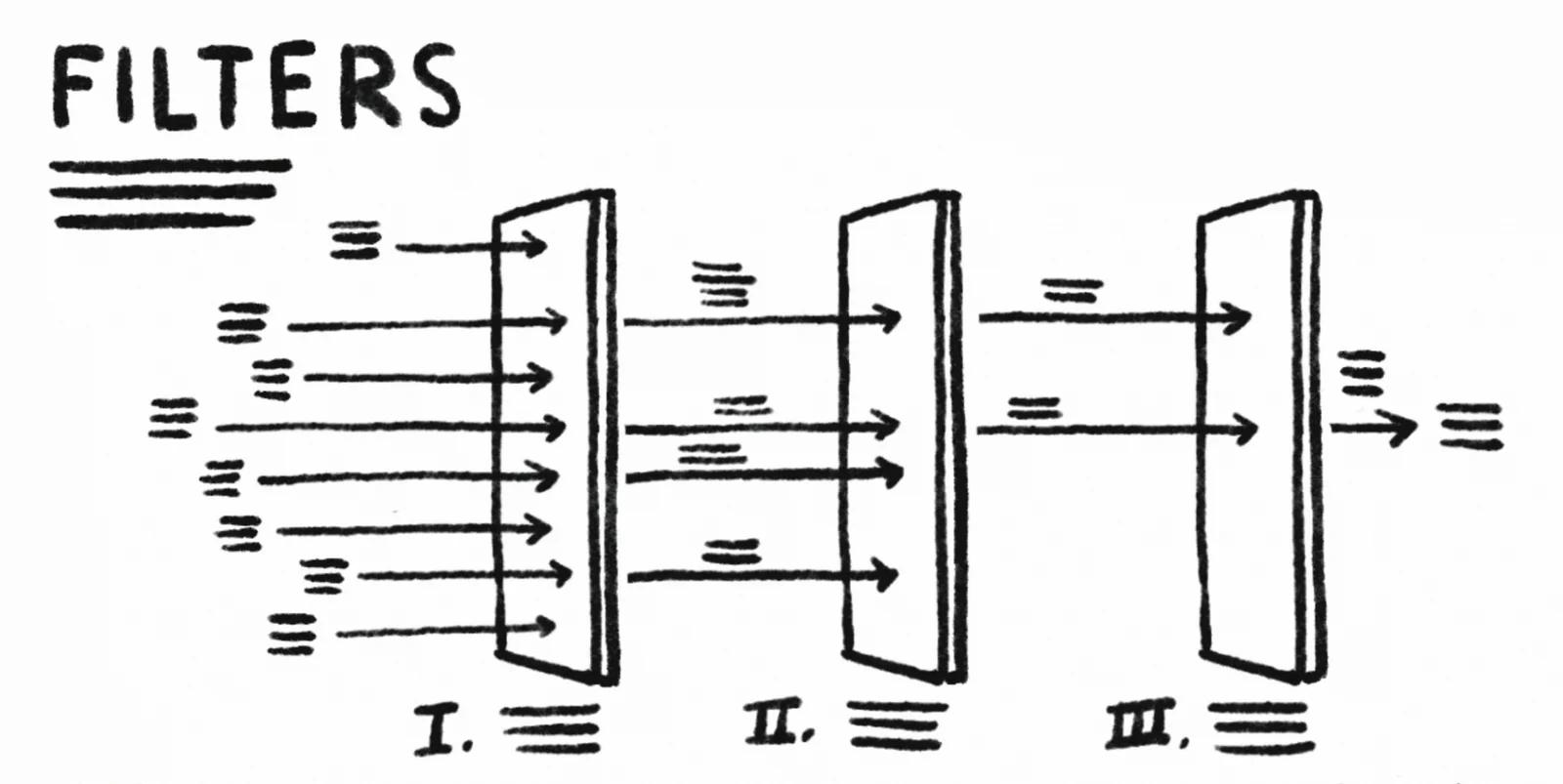
Filters remove junk, impurities, and unwanted material. A screen door or mosquito net keeps the bugs out. An air filter in your car keeps gunk out of the engine. A coffee filter keeps the grounds out of your coffee cup. Sales funnels filter out unqualified opportunities.
Filters are typically used to keep bad stuff out, but they can also be used to keep good stuff in. For example, you can use a sieve to wash your vegetables in the sink. The water passes through and the vegetables stay in the sieve.
A person who says what they mean without thinking first is said to have no filter. The implication is that you should think before you speak, to filter out things that might be extraneous, unwanted, or offensive.
Your mind has a filter between perception and long-term memory that is called working memory. It is limited in capacity and can only hold 5 to 7 things at a time. New ideas must pass through this filter before they can be understood and remembered. Your conscious mind filters out most of what you sense to help you focus on what’s important and relevant.
Filters don’t always work perfectly. For example, sometimes important emails don’t make it past your spam filter. Too much information at once, unfiltered, can cause information anxiety and map shock.
When you communicate, do you have trouble filtering what you say? Are you overloading people with too much information? Alternatively, are you overwhelmed by too much information coming at you everywhere, all at once? Can you create filters to separate the signal from the noise?