Ian Ph. UX designer

Here!
Me

Bookmarks

Playground

Writing
Project

GenVita - Generali

Capella GenAI

UOB AI-Pitch

Trading Agent AI

OSL Trading

TCB Design system

Omanadala
Online

ian.ph693@gmail.com

Bookmarks
Improve your Digital Chaos

fabric.io
Bring order to Your Photo Library

imagemate.app
Turn curiosity into adventure

rabbithole.chat
Clears Your Calendar Fog
pepperai.app
AI Journaling Assistant

Sparky App Store
Get News in a Nutshell


epigram.news
Headlines in 5 Minutes
particle.news
Memory Time Machine

brainsave.ai
AI wellness buddy

Doti App Store
Pocket Nutritionist

calai.app
#artificial intelligence
Fabric.io
🧠 The Calm Layer Over Your Digital Chaos

Visit
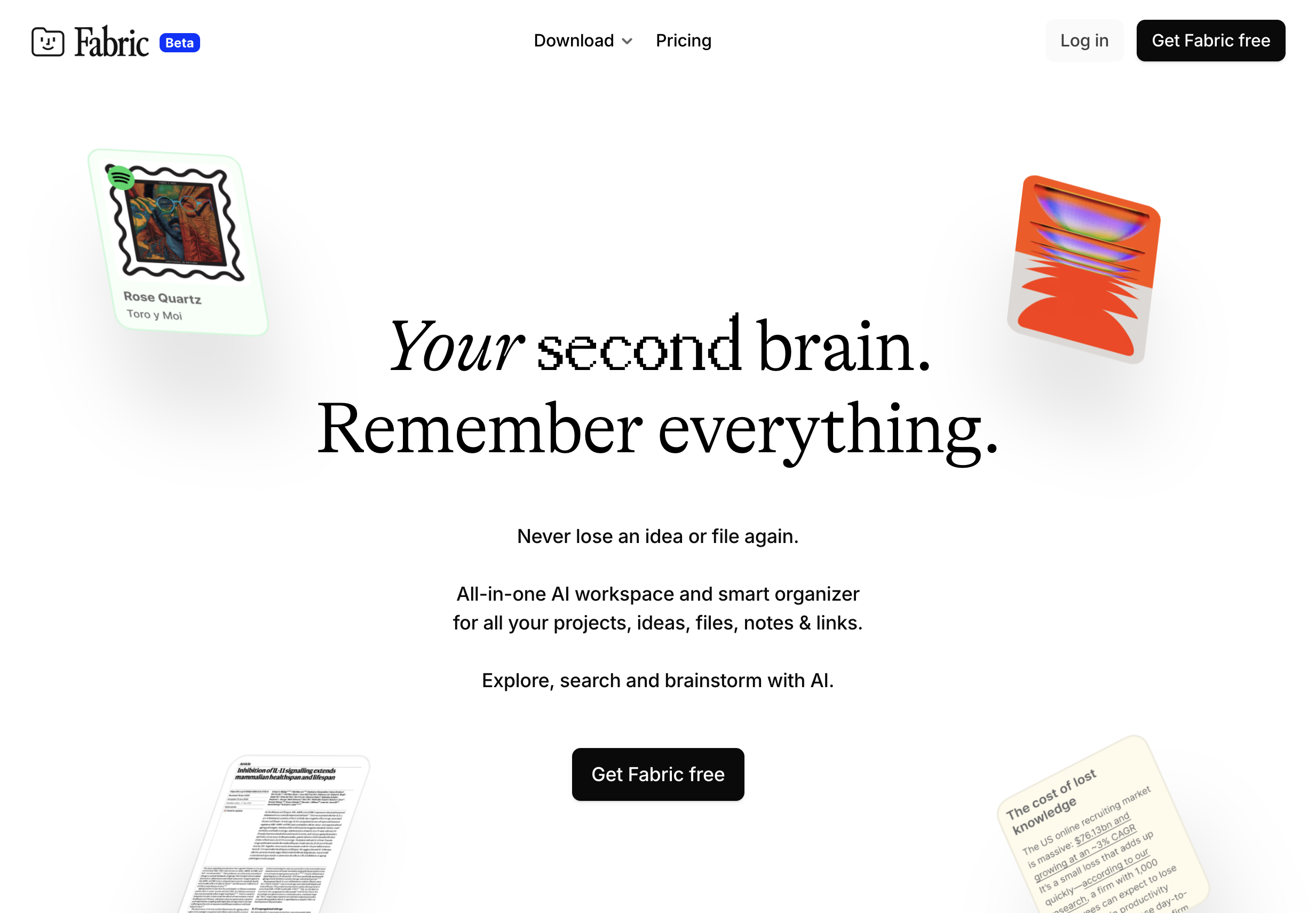
As someone constantly switching between domains — Reviews, Live Streaming, RedMart — I often find myself drowning in screenshots, research links, and half-written ideas across tools. I wanted a smarter way to manage this mess without adding more work.
Discovered Fabric, an AI-first file and knowledge management tool designed to organize your digital clutter with zero setup.
/ Automatic content-based sorting
It recognizes what files are about and organizes them — no folders, no tagging, no mental overhead.
/ Natural language search
Just type what you remember (e.g., “LazLive UX funnel sketch”), and it finds the file.
/ Team-friendly sharing
You can create and share knowledge spaces for collaborative annotation without sacrificing personal clarity.
/ Feels invisible
It runs in the background and catches screenshots, links, and notes as you go — a quiet system instead of another workspace to manage.
🤔 My Take / POV
Fabric feels like a missing link between Notion, Drive, and my messy desktop. As a product designer juggling inputs from multiple sources, this tool helps me stay clear-headed without overthinking organization. If you’re managing layered info across multiple workstreams — this might just calm your tabs down.
💡 What I Wish It Had
Would love to see semantic clustering — the ability to auto-group related files or ideas into topic-based “collections”. This could turn passive storage into active knowledge surfacing.